
Pangong Lake
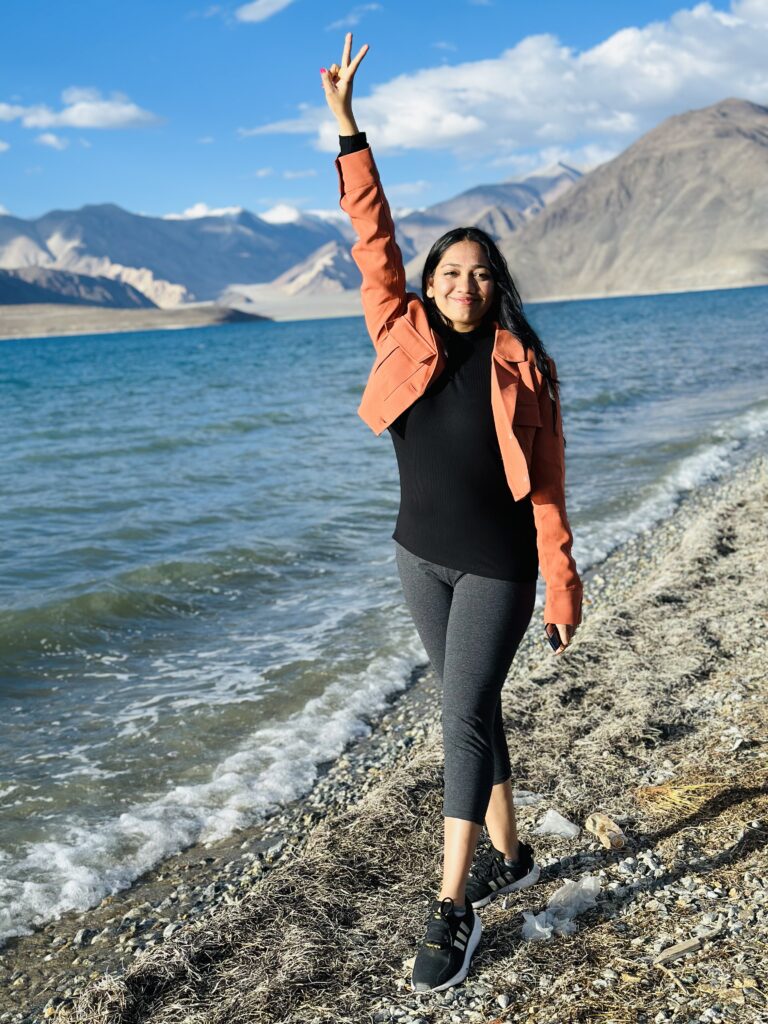
My journey through Ladakh carried one quiet longing — to stand before Pangong Lake and witness its stillness with my own eyes.
We left Nubra Valley before the day fully awakened. The road unfolded like a slow prayer — passing through silent villages, ancient mountains dusted with ice, frozen glaciers shining under pale sunlight, deep valleys carved by time, and restless rivers cutting through the rugged earth. Every mile felt raw, vast, and humbling. And then, in the distance, a streak of impossible blue appeared between the mountains.
Pangong it is!
No photograph prepares you for that first glimpse. It arrives gently, yet takes your breath away. As we drove closer, my heart began to race with a childlike excitement — the kind you cannot hide, the kind you should never outgrow. The long, unforgiving ride suddenly felt insignificant.
The lake did not look real. It looked serene. Still. Silent. Untouched. As if time had paused here… and the divine had taken a brush to paint patience, purity, and peace into one vast canvas. Words felt unnecessary. Silence felt sacred. We reached around evening, near sunset. The sky softened, and the lake began to transform — shades of blue melting into silver, silver dissolving into gold. The mountains stood like quiet guardians, reflected perfectly in the trembling light. It did not feel like a place. It felt like a presence. After quickly settling into our tent, we stepped back into the cold evening air to capture photographs. Yet even as the camera clicked, I knew the real imprint was being carved somewhere deeper — in stillness, in breath, in the quiet expansion within.
Despite the altitude, our breath flowed easily, as if the lake itself was calming our lungs and slowing our pulse. The greatest difficulty of the journey was not the terrain, nor the thin air. It was leaving. With hearts heavy and minds hushed by the lake’s silence, we said goodbye to Pangong — carrying its stillness within us, like a secret we will return to someday.
Leave a Reply